
 Written by
 Introduction
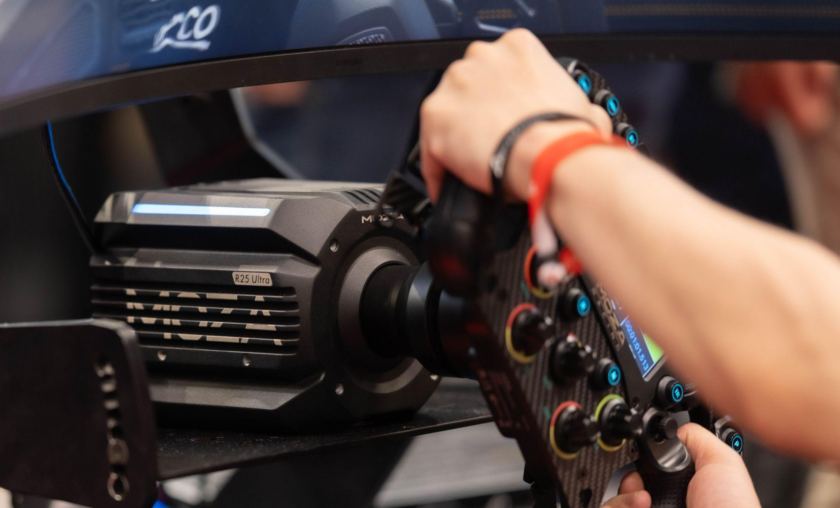
MOZA Racing has announced the MOZA R21 Ultra direct drive wheelbase, a new flagship unit built around a freshly engineered flat-wire motor. Announced alongside its bigger sibling, the R25 Ultra, the R21 Ultra sits above MOZA’s existing R9, R12, R16, and R21 lines as the brand’s most technically advanced base to date. For simracers who have been watching MOZA close the gap with the established direct drive names, this launch is worth a proper look.
Below, we break down what MOZA has confirmed about the R21 Ultra direct drive wheelbase, what remains unverified at the time of writing, and how it stacks up against the flagship offerings from Fanatec and Simucube.
What Is the MOZA R21 Ultra Direct Drive Wheelbase?
The MOZA R21 Ultra is a direct drive wheelbase for simracing, produced by MOZA Racing, a China-based hardware brand that has built its catalog around wheelbases, pedal sets, rigs, and H-pattern and sequential shifters. The “R21” designation refers to the base’s peak torque figure, following the naming convention MOZA has used across its previous R-series lineup.
What separates the R21 Ultra from earlier R21 hardware is that it belongs to MOZA’s new “Ultra” tier, a step above the standard R9, R12, R16, and R21 models. According to MOZA’s own announcement, the Ultra generation is built around a new motor architecture and updated internal electronics rather than simply reusing existing components at a higher torque rating. The R25 Ultra was revealed in the same communication, suggesting MOZA is expanding the top end of its range with two closely related flagship units rather than a single product. Simracers weighing this against other direct drive wheelbase options will want to note that MOZA is positioning both Ultra models as a genuine architectural leap, not a rebadge.
Key Specs and Torque Output
The headline figure for the MOZA R21 Ultra is a peak torque output of 21Nm, consistent with the wider Ultra range MOZA describes as spanning 21 to 25Nm across the two new bases. That puts the R21 Ultra firmly in flagship territory, well above entry and mid-range direct drive units and in line with what serious simracers expect from a top-shelf wheelbase.
Here is a summary of what MOZA has confirmed about the R21 Ultra hardware:
- Peak torque: 21Nm
- Motor type: new flat-wire, zero-cogging design, described by MOZA as a first for the sim racing hardware sector
- Onboard processing: 600MHz high-performance CPU
- Position sensing: 21-bit magnetic encoder
- Chassis construction: CNC-machined and die-cast aluminum housing
MOZA has not published a full isolated spec sheet distinguishing the R21 Ultra from the R25 Ultra beyond the torque difference implied by their names. Details such as exact USB polling rate, weight, physical dimensions, and power supply requirements were not included in the manufacturer’s announcement and remain unconfirmed at the time of writing.
Motor Technology and Torque Curve
The core upgrade behind the R21 Ultra is its new flat-wire motor. MOZA describes this as a zero-cogging design, meaning the motor should deliver smoother rotation and more consistent torque delivery through the wheel’s full range of motion, without the subtle notchiness that can affect cheaper direct drive motors at low speeds or near center. MOZA positions this as the first application of flat-wire motor technology in sim racing hardware, a claim tied directly to the manufacturer’s own announcement rather than independent third-party testing.
Combined with a 21-bit magnetic encoder for position tracking, the goal is clearly finer force feedback resolution, particularly useful for catching small slip angles and subtle weight transfer cues that matter in competitive racing.
Build Quality, Connectivity and Compatibility
MOZA confirms the R21 Ultra uses a CNC-machined and die-cast aluminum chassis, a construction approach aimed at rigidity and heat dissipation under sustained high-torque use. The base also runs on a 600MHz onboard processor, which MOZA frames as high-performance relative to prior generations, though comparative benchmarks against the brand’s own earlier bases were not provided.
Specific details on quick-release wheel connector type, MOZA Pit House software compatibility, supported operating systems, and any wireless or OTA firmware update functionality were not part of the source announcement. These remain open questions until MOZA publishes a complete technical datasheet or the product reaches retail listings.
Pricing and Release Date
At the time of writing, MOZA has not published official pricing or a confirmed retail release date for the R21 Ultra. The announcement covering the R21 Ultra and R25 Ultra focused on the underlying motor technology and headline specs rather than commercial availability.
This is a common pattern in hardware launches within the sim racing peripherals space: a technical reveal precedes storefront listings, sometimes by weeks or months. Simracers interested in the R21 Ultra should treat any third-party pricing figures circulating online with caution until MOZA confirms details through its official channels or authorized retailers.
Given MOZA’s historical positioning, the brand has generally aimed to undercut rivals at comparable torque levels while building out a broader ecosystem of pedals, shifters, and rigs designed to work alongside its wheelbases. Whether that pricing philosophy carries over to the Ultra tier is not yet confirmed.

How the R21 Ultra Compares to Rivals
The flagship direct drive segment has become genuinely competitive over the past few years, with Simucube, Fanatec, Asetek, and VRS all pushing torque figures, force feedback fidelity, and software ecosystems in different directions. MOZA’s Ultra launch is a direct signal that the brand wants a seat at that top table rather than being seen purely as a value-focused alternative. For a deeper breakdown of positioning, see our MOZA vs Fanatec vs Simucube comparison.
The table below lays out what is currently known and unknown about the R21 Ultra relative to two of the most recognized flagship-tier competitors. Figures for Fanatec and Simucube reflect each brand’s widely published specifications for their respective top-tier models; MOZA’s column reflects only what has been officially confirmed for the R21 Ultra so far.
| Feature | MOZA R21 Ultra | Fanatec (flagship-tier) | Simucube (flagship-tier) |
|---|---|---|---|
| Peak torque | 21Nm | Varies by model, up to roughly 20Nm with boost | Up to roughly 30Nm on top-tier units |
| Motor type | New flat-wire, zero-cogging design | Direct drive, brand-specific motor design | Direct drive, brand-specific motor design |
| Position encoder | 21-bit magnetic encoder | Not confirmed in this brief | Not confirmed in this brief |
| Onboard processing | 600MHz CPU | Not confirmed in this brief | Not confirmed in this brief |
| Price | Not yet announced | Premium flagship pricing tier | Premium flagship pricing tier |
| Release date | Not yet confirmed | Already available | Already available |
MOZA R21 Ultra vs Fanatec and Simucube
On paper, the R21 Ultra’s 21Nm peak torque puts it in the same conversation as Fanatec’s higher-end direct drive offerings, while sitting below the very top of Simucube’s range, where torque figures climb further. Torque numbers alone don’t tell the whole story in direct drive wheelbases, though. Motor smoothness, latency, chassis rigidity, and the quality of the accompanying software all shape how that torque actually feels on track, and MOZA’s zero-cogging flat-wire motor claim is specifically aimed at that smoothness question.
Fanatec and Simucube both have long track records and mature software ecosystems that MOZA is still building toward. The R21 Ultra’s real competitive position will depend heavily on independent testing once units reach reviewers, along with how MOZA prices it relative to these established rivals.
Who Should Buy the R21 Ultra?
Based on what’s confirmed so far, the R21 Ultra looks aimed at simracers who want flagship-level torque and a genuinely new motor design, without necessarily paying for the absolute ceiling of torque output that some ultra-premium bases offer. It’s a fit for drivers stepping up from mid-range direct drive units like MOZA’s own R16 or R21, or for those already invested in MOZA’s pedal and rig ecosystem who want to upgrade the wheelbase without switching brands entirely. If you’re still mapping out a full setup, our simracing rig buying guide covers how a wheelbase upgrade fits into the bigger picture.
Racers who need maximum peak torque for very heavy GT3 or open-wheel force feedback profiles may still want to wait for full independent reviews or consider the R25 Ultra once more detail on the torque difference between the two Ultra models is confirmed. Anyone budget-conscious should hold off on purchase decisions until MOZA confirms official pricing.
FAQ
What is the peak torque of the MOZA R21 Ultra?
MOZA has confirmed 21Nm of peak torque for the R21 Ultra, part of a broader 21-25Nm range shared with the R25 Ultra.
Is the MOZA R21 Ultra available to buy now?
No official release date or retail availability has been confirmed by MOZA at the time of writing.
How much does the MOZA R21 Ultra cost?
Pricing has not been announced. Any figures circulating online ahead of an official MOZA statement should be treated as unconfirmed.
What makes the R21 Ultra’s motor different from previous MOZA wheelbases?
It uses a new flat-wire, zero-cogging motor design, which MOZA describes as a first for sim racing hardware, paired with a 21-bit magnetic encoder and a 600MHz onboard CPU.
How does the R21 Ultra compare to the R25 Ultra?
Both were announced together as part of MOZA’s new Ultra tier, with the main confirmed difference being peak torque, 21Nm versus a higher figure for the R25 Ultra. Detailed feature-by-feature differences have not yet been published separately by MOZA.
Source: mozaracing.com