 Written by
 Fanatec remains the official Fanatec GTWS hardware partner heading into the rest of the 2026 season, Polyphony Digital has confirmed. The German hardware maker keeps its role supplying force feedback wheels and wheelbases for the competitive esports arm of GT World Challenge, even as a separate collaboration with rival brand MOZA Racing takes shape behind the scenes. For anyone following the latest simracing news, this dual announcement is one of the more consequential hardware stories of the year, touching everything from event-day equipment rules to the longer-term direction of console-based simracing esports.
Fanatec Remains the GTWS Hardware Partner
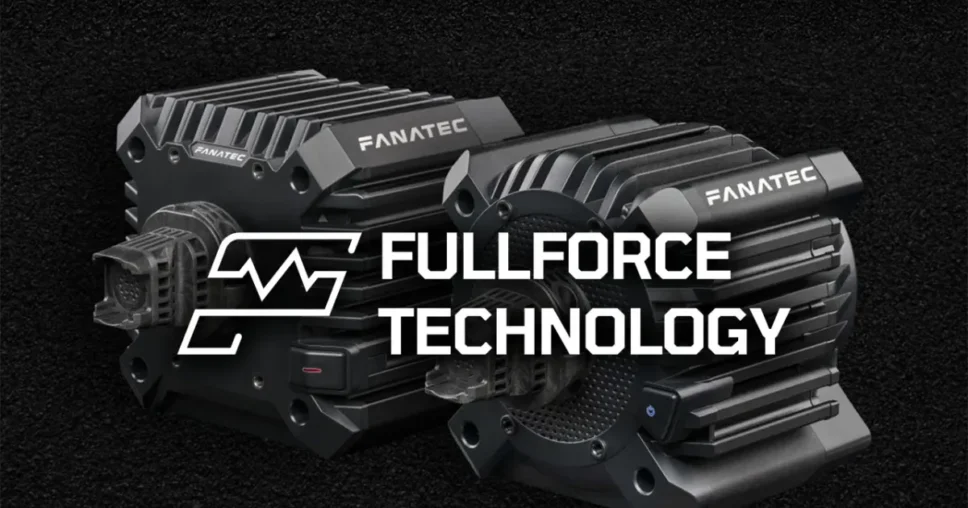
Despite years of financial turbulence and its 2022 acquisition by Corsair, Fanatec continues to hold its steering wheel partnership with GT World Series (GTWS). Polyphony Digital’s decision to keep Fanatec in place signals continuity for a brand that has long been a fixture in simracing esports, supplying direct drive wheelbases used by competitors across GT World Challenge’s simracing events.
For teams and solo drivers who have built their rigs around Fanatec’s direct drive ecosystem, the confirmation removes any uncertainty about hardware validation for the remainder of the season. Competitors relying on Fanatec’s ClubSport and Podium ranges can continue competing without needing to source alternative equipment, a meaningful reassurance given how tightly GTWS regulates approved gear at official events.
It also matters for broadcast continuity. Fanatec branding has been woven into GTWS livestreams for several seasons, and maintaining that visual consistency helps Polyphony Digital avoid disrupting sponsorship packages already sold around the current season’s coverage.
Readers curious about how Fanatec’s ecosystem stacks up against other direct drive options can check our ongoing Fanatec hardware coverage for setup guides, force feedback tuning tips, and compatibility notes relevant to GT7 and other GT World Challenge-supported titles.
Background: GT World Series and Its Hardware Deals
GT World Series is the esports competition built around Gran Turismo 7, run in partnership with GT World Challenge, the real-world endurance racing series operated by SRO Motorsports Group. Hardware partnerships matter enormously in this space because GTWS events often require drivers to compete on approved peripherals, both to ensure fairness and to showcase branded equipment to a global streaming audience.
Fanatec’s relationship with GTWS dates back several seasons, and the brand’s force feedback hardware has effectively become synonymous with the series’ broadcast presentation. Sponsorship deals of this kind typically bundle console compatibility requirements, since GT7 remains a PlayStation exclusive, a detail that has shaped which manufacturers can realistically participate as official partners.
- GT World Series pairs simracing competition with GT World Challenge’s real-world racing calendar
- Hardware partners must support PlayStation-native compatibility for GT7
- Fanatec has held its steering wheel partnership across multiple prior seasons
- Equipment approval rules apply strictly at official GTWS live events and finals
That last point is worth underlining: unlike open PC simracing leagues where drivers can often bring whichever wheelbase they prefer, GTWS finals have historically required competitors to use approved hardware on-site, which is exactly why confirming Fanatec’s continued status carries real competitive weight rather than being a purely symbolic sponsorship renewal.
The MOZA Partnership Explained
Alongside Fanatec’s continued role, Polyphony Digital has named MOZA Racing an official peripherals partner for GTWS. MOZA currently has no hardware natively compatible with PlayStation, the platform GT7 runs on. To close that gap, Polyphony Digital and MOZA are reportedly developing a Gran Turismo-branded controller with native PS5 support — a first for the fast-growing Chinese manufacturer.
This is a notable shift in the balance of power within simracing hardware. MOZA has spent the past several years aggressively expanding its PC-focused direct drive lineup, competing directly with Fanatec on price and feature set. Securing a PlayStation-native product developed in collaboration with Polyphony Digital itself would give MOZA a foothold it has previously lacked, potentially opening GT7’s console-based competitive scene to a second major hardware brand for the first time.
No firm release window has been confirmed for the PS5-native controller, and neither company has published detailed specifications. Even so, the fact that Polyphony Digital is willing to co-develop hardware, rather than simply license branding to an existing product, suggests the studio sees genuine strategic value in diversifying its approved peripheral lineup ahead of future GT World Challenge seasons.
What MOZA Brings to Simracing
Kazunori Yamauchi cited MOZA’s camera-stabilization gimbal technology as the reason behind Polyphony’s interest, indicating the partnership could extend beyond a standard racing wheel into broader peripheral design. That gimbal expertise, originally developed for consumer camera stabilization, hints at ambitions beyond a conventional wheelbase-and-pedals bundle, possibly informing new approaches to motion feedback or peripheral ergonomics down the line.
MOZA’s existing PC catalog already spans entry-level to high-torque direct drive wheelbases, load cell pedal sets, and quick-release wheel rims, giving it a reasonably mature product foundation to build a console-focused offshoot from rather than starting entirely from scratch.
Fanatec vs MOZA: Comparing Hardware Approaches
With both brands now holding official roles within GT World Series, it’s worth laying out how their current positioning differs. The table below summarizes each company’s role, platform focus, and hardware maturity as of this announcement.
| Brand | Current GTWS Role | Platform Focus |
|---|---|---|
| Fanatec | Official steering wheel partner | PC and console-compatible wheelbases |
| MOZA | Official peripherals partner (new) | PC now, PS5-native controller in development |
Fanatec’s advantage remains its established, event-validated ecosystem — a full lineup of direct drive wheelbases, load cell pedals, and wheel rims already proven at GTWS events. MOZA’s opportunity lies in its momentum: a rapidly growing product catalog and, potentially, first-mover status on a Gran Turismo-branded controller built specifically for PS5. Neither brand currently overlaps completely with the other’s platform strengths, which is likely why Polyphony Digital opted to bring both into the fold rather than replace one with the other. For competitors and organizers alike, this arrangement effectively splits the near-term and long-term bets: Fanatec covers the proven, already-approved experience GTWS relies on today, while MOZA represents a hedge on where console-based simracing hardware could head once a genuinely PlayStation-native alternative exists. That balance of stability versus experimentation is precisely why the announcement has drawn attention well beyond hardware enthusiasts.
What This Means for Simracers and Teams
For competitors, the setup doesn’t change immediately — Fanatec gear stays validated for GTWS events. But the MOZA deal opens the door to more hardware options down the line, particularly for PlayStation-based GT7 racers who have had fewer third-party choices than their PC counterparts.
In practical terms, GTWS drivers currently competing on Fanatec equipment have no reason to change anything about their current setup. The steering wheel partnership confirmation simply extends the status quo. What’s more interesting is the medium-term outlook: if MOZA’s PS5-native controller ships and receives GTWS approval, console-based competitors could soon choose between two officially sanctioned direct drive ecosystems rather than one. That kind of competition tends to benefit simracers directly, through better pricing, faster firmware iteration, and stronger customer support as both brands vie for visibility within one of Gran Turismo’s most-watched esports platforms.
Teams managing multiple driver rosters should also watch this space closely, since hardware standardization across a roster can simplify logistics for events and streaming setups alike. A second approved brand could eventually diversify how organizations equip their drivers heading into future GT World Challenge seasons, and could also affect how sponsorship budgets are split between hardware partners going forward.
Timeline of the Announcement
The key developments around this story, as confirmed so far, break down as follows:
- Fanatec’s GTWS steering wheel partnership confirmed as ongoing for 2026
- MOZA named official peripherals partner by Polyphony Digital
- Kazunori Yamauchi cites MOZA’s gimbal stabilization technology as a driver of interest
- GT-branded, PS5-native MOZA controller in development, with no launch date confirmed
FAQ: Fanatec, MOZA and GTWS Hardware
- Is Fanatec still GTWS’s hardware partner? Yes, Fanatec remains the official steering wheel partner for GT World Series, and its equipment stays validated for competitive events throughout the 2026 season.
- What is MOZA’s role now? MOZA has been named an official peripherals partner, with a PS5-native GT-branded controller reportedly in the works with Polyphony Digital.
- Does MOZA hardware work on PlayStation today? Not yet — MOZA currently lacks native PlayStation compatibility, which the new controller aims to address.
- Will Fanatec and MOZA hardware ever be interchangeable at GTWS events? That remains unclear, but the presence of two official hardware partners suggests Polyphony Digital is open to broadening approved equipment options as MOZA’s PlayStation-compatible product matures.
For readers tracking how this story develops, our MOZA hardware tag page will collect future coverage as the PS5-native controller nears release, alongside continued updates on Fanatec’s GTWS commitments.
Source: boxthislap.org