 Written by
 Forza Horizon 6 has officially launched, and the simracing and arcade-racing community has spent the past several weeks getting acquainted with the biggest map the franchise has ever built. Developed by Playground Games and published under Xbox Game Studios, the sixth mainline entry moves the series to Japan, swaps Mexico’s dusty trails for neon-lit city streets and mountain switchbacks, and expands the garage to more than 550 cars at launch. If you’ve been out of the loop since the May 19 release, here’s everything that’s changed, what’s confirmed, and what to expect if you’re just now jumping in.
This recap pulls together the launch details, the Japan setting, the car roster, and platform availability in one place, so whether you’re a longtime Horizon fan or a simracer curious about the arcade side of the genre, you’ll know exactly what you’re getting into. We’ll also walk through how the rollout has held up over the first couple of months, since a launch week impression and a two-month impression can tell very different stories about a game this size.
Forza Horizon 6 Is Out: Quick Recap
Forza Horizon 6 launched on May 19, 2026, for Xbox Series X|S, PC, and Xbox Game Pass. Players with the Premium edition got a head start, with early access opening on May 15, four days ahead of the general release. That early window let dedicated players start building their car collections and exploring Japan before the wider community piled in.
A PlayStation 5 version is planned for later in 2026, so Xbox and PC players currently have the field to themselves. If you’re on console and waiting for a PS5 release, there’s no confirmed date yet beyond the general “later this year” window, so keep an eye on official Xbox channels for updates.
Since launch, the game has settled into its usual rhythm of seasonal content drops, community events, and the kind of steady support Horizon titles are known for. The core experience, though, is set: a massive open world, a deep car list, and the arcade-friendly handling model the series has refined over five previous games. Two months in, that foundation has held up well enough that most of the ongoing conversation is about content updates rather than launch-week hiccups.
What Is Forza Horizon 6?
For anyone new to the franchise, Forza Horizon is an open-world racing series developed by Playground Games and published by Xbox Game Studios. It sits alongside the more simulation-focused Forza Motorsport as Microsoft’s other big racing franchise, but where Motorsport chases lap-time precision on real circuits, Horizon is built around exploration, festival culture, and driving whatever you want, wherever you want.
Each entry has planted its flag in a different real-world location. The series started in Colorado with the original Forza Horizon, then moved to southern France for Forza Horizon 2, Australia for Forza Horizon 3, the United Kingdom for Forza Horizon 4, and Mexico for Forza Horizon 5, which launched back in November 2021. That’s a five-year gap between mainline entries, the longest in the series’ history, and it shows in the scope of what Playground Games built for Horizon 6.
Forza Horizon 6 continues that tradition of reinvention while keeping the formula that made the series popular: online-connected open-world driving, festival-style events, a huge and constantly expanding car list, and a difficulty curve that welcomes newcomers without alienating players who want a genuine challenge.
Japan Setting: The Biggest Map Yet
The headline change for Forza Horizon 6 is the setting. After Mexico’s canyons and volcanoes in Forza Horizon 5, Playground Games moved the Horizon Festival to Japan, and the scale of the new map reflects it. Tokyo serves as the central hub, and according to details from the launch, the city itself is roughly five times larger than any previous Horizon game’s urban center.
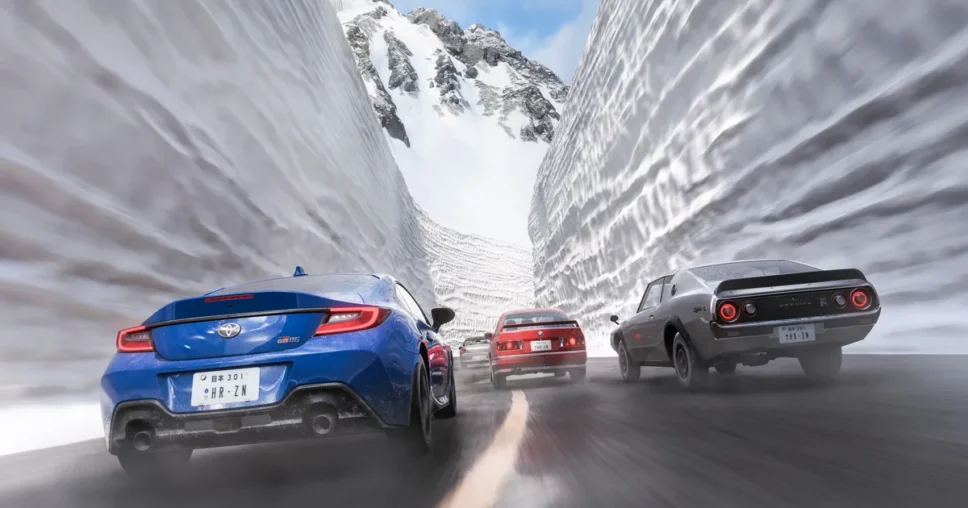
That’s a significant shift for a series that has always balanced dense cities against open countryside. Japan gives Playground Games a mix of environments that previous Horizon maps only hinted at: tight, neon-drenched city blocks that reward precision driving, sweeping coastal roads, and mountain passes that call for a completely different setup than what works downtown. It’s the kind of variety that keeps a garage full of different car types genuinely useful, not just decorative.

Dynamic seasons make a return in Forza Horizon 6, and they’re not just a visual layer sitting on top of the map. Weather and seasonal changes affect road surfaces directly, so the same stretch of tarmac can behave very differently depending on when you’re driving it: a mountain pass that grips well in summer can turn treacherous once winter rolls in, and a coastal road can flood or dry out depending on the in-game season. Combined with the sheer size of the Japan map, that seasonal system gives Forza Horizon 6 more long-term variety than any previous entry in the franchise, since routes players have already learned inside and out can still throw surprises at them months into the game. It’s a design choice that rewards players who stick around well past launch week rather than moving on once the initial map exploration wears off.
Map Size Comparison Table
To put the scale of Forza Horizon 6’s Japan map in perspective, here’s how it stacks up against recent entries in the series, based on what’s been confirmed so far.
| Game | Setting | Release | Notable Map Detail |
|---|---|---|---|
| Forza Horizon 4 | United Kingdom | 2018 | Dynamic seasons introduced |
| Forza Horizon 5 | Mexico | November 2021 | 500+ cars at launch |
| Forza Horizon 6 | Japan | May 19, 2026 | Largest map in franchise history; Tokyo hub 5x larger than prior city centers |
The jump from Forza Horizon 5 to Forza Horizon 6 is the biggest single-game leap the franchise has made in terms of raw map scale, and it lines up with the five-year development gap between the two titles.
Car Roster: 550 Vehicles at Launch
Forza Horizon 6 launched with more than 550 cars, edging out Forza Horizon 5’s launch lineup of over 500. That’s not a massive jump on paper, but it comes alongside meaningful upgrades to how the cars themselves are built and presented. Forza Aero, the game’s aerodynamic customization system, has been updated, and players now have more freedom with cosmetic details like window livery placement and body kit options.
Here’s a quick breakdown of what’s new or improved on the car side at launch:
- 550+ vehicles available at launch, an increase over Forza Horizon 5’s roster
- Updated Forza Aero system for deeper aerodynamic customization
- Window livery support, letting players apply designs directly to glass surfaces
- Expanded body kit options for more visual customization per vehicle
- Customizable garages, a new feature that lets players personalize how and where their collection is displayed
The customizable garage feature is a first for the series. Instead of a generic storage menu, players can now shape the space where their cars live, which fits the broader trend of Horizon games leaning into personalization beyond just the vehicles themselves. Combined with the deeper Forza Aero tools, it means two players with the same starting car can end up with garages that look nothing alike after a few weeks of play.
Release Timeline: From May 19 Launch to Today
Looking back at how the rollout unfolded: Premium edition owners got early access starting May 15, 2026, giving them a four-day head start on Japan’s roads and the expanded car list. The full release followed on May 19, 2026, opening the game to everyone on Xbox Series X|S, PC, and Xbox Game Pass simultaneously.
As of today, July 11, 2026, Forza Horizon 6 has been out for just under two months. That’s enough time for the simracing community to have thoroughly explored Tokyo, worked through the initial car list, and started settling into the seasonal rhythm that defines the mid-life cycle of most Horizon titles. The PS5 version remains on the horizon for later in the year, so PlayStation players are still waiting for their turn behind the wheel while the Xbox and PC community continues to dig into what launched back in May.
Platforms and Game Pass Availability
Forza Horizon 6 is available on Xbox Series X|S and PC, and it was included in Xbox Game Pass from day one. That’s consistent with how Microsoft has handled recent first-party racing releases, and it means Game Pass subscribers didn’t need a separate purchase to get behind the wheel at launch.
A PlayStation 5 version is planned for later in 2026, though no specific date has been confirmed beyond that general window. For now, the game remains an Xbox and PC exclusive, with Game Pass serving as the most accessible entry point for players who already subscribe to the service and want to try the Japan map without committing to a full purchase.
FAQ: Forza Horizon 6 Questions Answered
When did Forza Horizon 6 release?
Forza Horizon 6 released on May 19, 2026, with early access for Premium edition owners starting May 15, 2026.
Where is Forza Horizon 6 set?
Forza Horizon 6 is set in Japan, with Tokyo serving as the central hub. It’s reported to be roughly five times larger than city centers in previous Horizon games.
How many cars are in Forza Horizon 6?
The game launched with more than 550 cars, along with updates to the Forza Aero customization system, window livery support, and expanded body kit options.
Is Forza Horizon 6 on Xbox Game Pass?
Yes, Forza Horizon 6 was available on Xbox Game Pass starting on its May 19, 2026 launch day, alongside its release on Xbox Series X|S and PC.
Will Forza Horizon 6 come to PS5?
A PS5 version is planned for later in 2026, though a specific release date hasn’t been confirmed yet.
Source: simracing.fan